
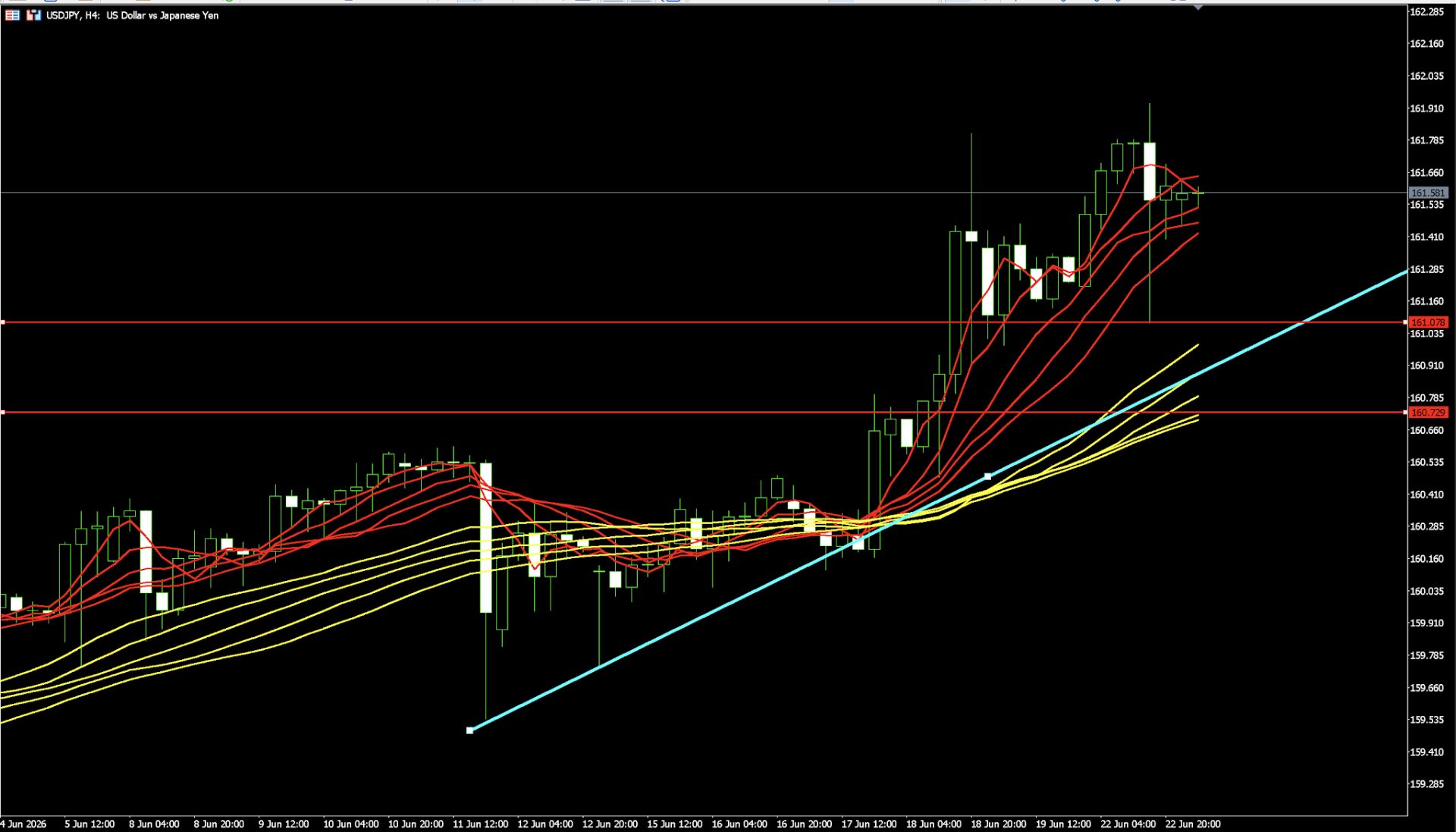
The Japanese yen is nearing a 40-year low as the Bank of Japan (BOJ) continues its cautious approach to interest rate hikes while facing strong upward pressure on the US dollar. The widening interest rate gap between the United States and Japan has led to significant volatility in the forex market, with the USD/JPY exchange rate recently touching levels last seen in 1986. Despite a recent BOJ rate increase, market confidence in Japan’s policy shift remains limited, fueling speculation about further interventions and monetary tightening.
Last week, the BOJ raised its benchmark interest rate from 0.75% to 1.0%, marking the highest level since 1995. However, this quarter-point hike was met with internal dissent among BOJ policymakers, revealing tensions within the central bank regarding the pace of normalization. New members appointed by the Prime Minister opposed the increase, highlighting political and economic pressures that complicate decision-making.
Market participants widely expect additional BOJ rate hikes before the end of the year, with surveys indicating that up to 90% of economists foresee another increase by December and nearly a quarter predicting it could happen as early as September. This expectation is driven by persistent inflation risks and the need for Japan to narrow the growing interest rate differential with the US Federal Reserve, which currently holds rates between 3.50% and 3.75%.
The yen’s weakness has prompted the Japanese government to intervene in foreign exchange markets aggressively. Between late April and early May, Japan spent a record 11.7 trillion yen ($72.44 billion) attempting to stabilize the currency. Despite these efforts, the yen continues to hover near critical support levels around 161 against the dollar, with traders divided over whether intervention will succeed or if further depreciation is inevitable.
Additionally, Japan’s government bond market shows signs of stress amid rising yields and waning demand. Recent auctions for five-year and thirty-year government bonds have recorded bid-to-cover ratios below their yearly averages, reflecting investor caution in a rising interest rate environment. The BOJ’s gradual tightening has also impacted traditional yen carry trades, reducing their attractiveness as borrowing costs rise domestically.
Former BOJ policymaker Sayuri Shirai has suggested that if the US Federal Reserve continues raising rates this year, the yen could weaken further to levels between 163 and 165 per dollar, matching lows not seen since 1986. While some analysts predict that Japan’s terminal policy rate may reach around 1.5% next year, others argue it could climb higher based on economic growth and inflation targets.
Looking ahead, uncertainty surrounds both monetary policy and potential fiscal measures by Prime Minister Sanae Takaichi’s administration amid consumption tax adjustments and elevated government bond yields. This complex backdrop contributes to ongoing volatility in yen currency pairs such as USD/JPY, EUR/JPY, GBP/JPY, and AUD/JPY.
Traders face challenging decisions as they weigh long-term trends against possible surprise interventions or accelerated BOJ tightening. With global economic factors like US inflation expectations and geopolitical tensions influencing capital flows, the yen remains at a critical juncture where policy choices will significantly affect its trajectory in coming months.