The EUR/USD currency pair is currently navigating a critical phase as recent U.S. employment data and European Central Bank (ECB) signals influence market sentiment. The U.S. economy added only 57,000 jobs in June, a significant miss compared to expectations, which has tempered prospects for a Federal Reserve (Fed) interest rate hike this month. This weaker jobs report has led traders to price in a lower probability of a July rate increase, although the door remains open for potential hikes later in the year, particularly in September.
Despite the subdued payroll growth, some labor market indicators suggest ongoing strength. Average weekly overtime hours and temporary employment have increased, while wage growth remains positive, albeit showing signs of moderation. These mixed signals complicate the Fed’s decision-making process as it balances slowing job creation against persistent inflationary pressures.
The U.S. dollar has experienced short-term pressure due to diminished expectations of an imminent rate hike. However, it continues to hold key support levels near 100 on the dollar index, supported by the possibility of future tightening. This stability limits the downside risk for the dollar and keeps EUR/USD sensitive to shifts in central bank policies.
On the European front, inflation data points to easing price pressures with headline inflation falling to 2.8% in June from 3.2% previously, and core inflation also declining. This reduces urgency for the ECB to raise rates further in July, suggesting a potential pause that could restrain euro gains. Market participants await ECB meeting minutes and comments from ECB President Christine Lagarde for further guidance on monetary policy direction.
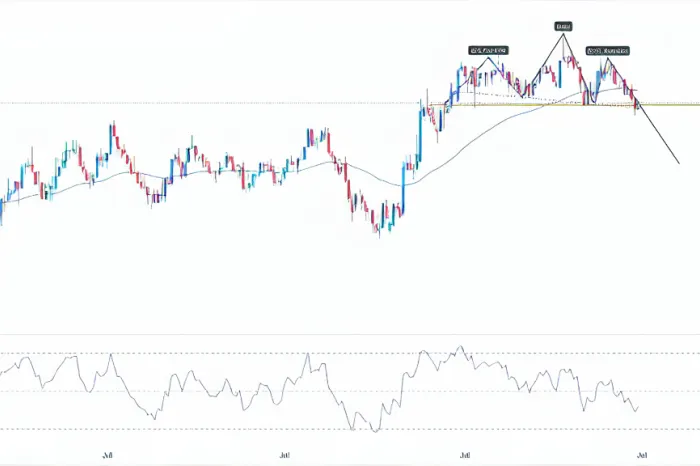
Technically, EUR/USD has shown resilience after recent lows near 1.1260, maintaining support above this key level while attempting a rebound toward resistance around 1.1480. The pair faces a bearish head-and-shoulders pattern on the weekly chart, signaling possible continuation of downward momentum if it breaks below current support. Conversely, surpassing resistance near 1.1630 could invalidate this bearish outlook and open the door for gains toward 1.18 or higher.
Looking ahead, the trajectory of EUR/USD will largely depend on comparative monetary policy signals from the Fed and ECB amid evolving economic data. A Fed pause combined with renewed ECB hawkishness could drive EUR/USD higher, while mutual caution might keep the pair range-bound. Traders remain attentive to upcoming U.S. inflation reports and European economic releases that will shape central bank expectations in the coming weeks.
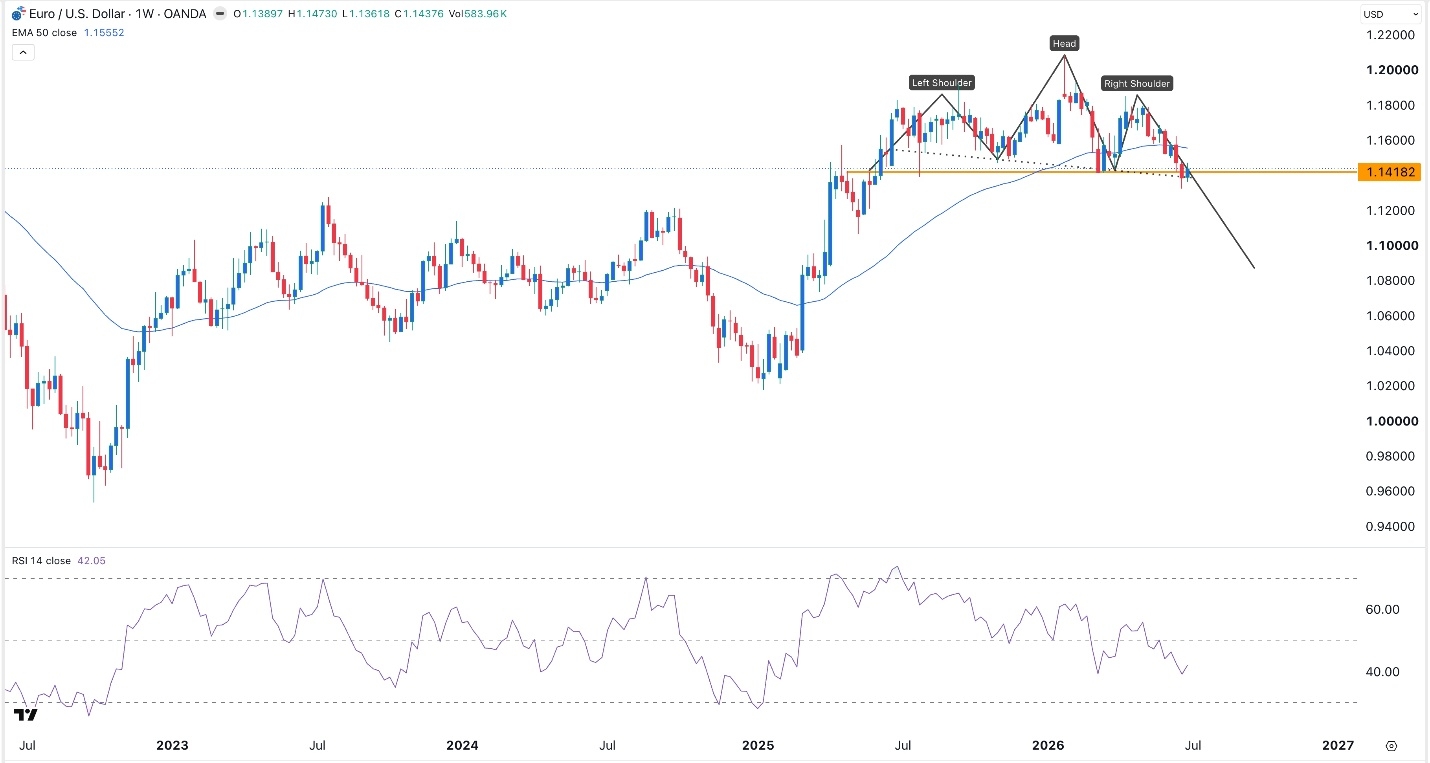
In summary, EUR/USD is positioned at a pivotal juncture influenced by a softer U.S. labor market and moderating Eurozone inflation. The interplay between Fed patience and ECB caution will dictate near-term movements, with technical factors reinforcing the importance of key support and resistance levels around 1.1260 and 1.1630 respectively.