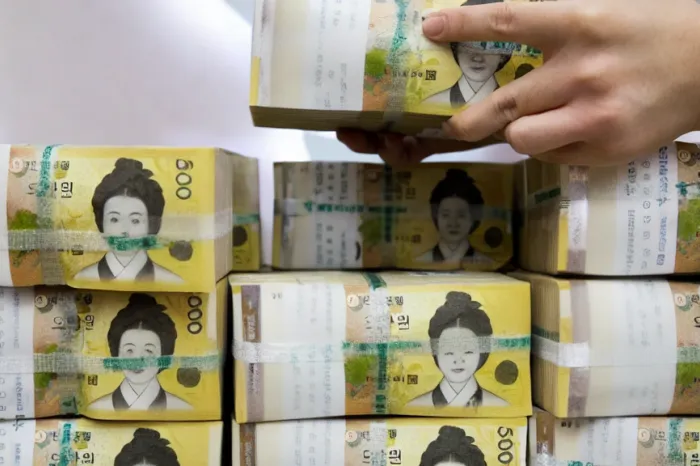
Starting Monday, the Seoul foreign exchange market will begin near-24-hour trading of the South Korean won against the US dollar on weekdays, marking a significant step toward modernizing Korea’s currency market and improving accessibility for foreign investors. The market will operate continuously from 6 a.m. Monday to 6 a.m. Saturday during New York daylight saving time, and from 7 a.m. Monday to 7 a.m. Saturday outside of daylight saving periods. This extended trading schedule aims to reduce reliance on offshore markets and allow the won to better reflect global economic developments in real time.
Previously, the won-dollar spot market in Seoul operated from 9 a.m. to 3:30 p.m., with extended hours until 2 a.m. introduced in July 2024 to cover London trading sessions. However, foreign investors still heavily relied on the offshore nondeliverable forward (NDF) market for won exposure after Seoul’s market closed. NDFs account for about 80 percent of won forward trading, far exceeding the global average of 21 percent, highlighting the need for more robust onshore liquidity.
The new trading hours are expected to improve price efficiency by allowing overnight global events and dollar movements to be absorbed gradually rather than causing sharp price adjustments at market openings. This change benefits exporters and importers by providing continuous pricing throughout the day and night, helping them better manage currency risk without being caught off guard by sudden exchange rate swings at market open.
Despite these advantages, concerns remain about liquidity during overnight hours when trading volume tends to be low. Thin liquidity could lead to increased volatility, as even small trades or news events might trigger larger-than-normal exchange rate fluctuations. Authorities have expressed readiness to intervene if currency movements stray too far from fundamental values or if speculative activity intensifies.
The won-dollar exchange rate has seen upward pressure recently, climbing above 1,550 won per dollar during intraday trading sessions amid ongoing dollar strength and foreign investor outflows from Korean stocks. Analysts warn that while the extended trading hours will not change underlying economic factors driving the won, they make effective risk management more important than ever given potential microstructural challenges during less liquid periods.
Korea’s financial regulators are preparing enhanced surveillance systems to monitor the foreign exchange market around the clock. These systems aim to detect unusual trading patterns quickly and prevent speculative attacks similar to historical currency crises experienced elsewhere. The country’s foreign exchange reserves remain robust at $427.4 billion but maintaining stability amid a more open and longer trading day remains a priority.
Overall, Seoul’s move to near-24-hour forex trading represents an important step toward aligning Korea with global currency market standards. It promises greater convenience for investors and companies alike while reducing offshore market influence on the won’s value. However, balancing improved accessibility with risks related to overnight liquidity will require careful oversight as this new system takes effect.