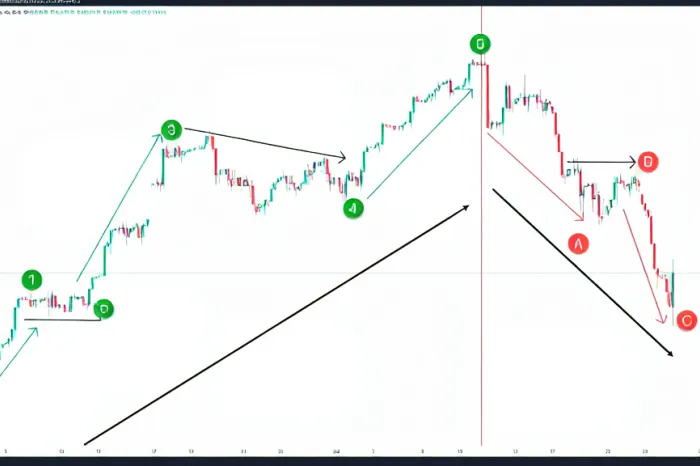
The recent movements of the EURUSD currency pair have clearly demonstrated the practical application of Elliott Wave theory in forex trading. Despite its reputation as a complex analytical tool, Elliott Wave patterns can provide traders with straightforward and actionable insights when carefully observed.
Earlier this year, the EURUSD embarked on a strong upward trend starting near 1.0178. This rally unfolded through a classic five-wave impulse pattern, with the third wave standing out due to its notable strength. The fourth wave formed a triangle consolidation, signaling a pause before the final upward push. Analysts at the time predicted that the pair would approach a peak around 1.2100 before entering a corrective phase.
By late June, EURUSD closely approached this forecasted level, reaching approximately 1.2083. After hitting this high, the pair experienced a sharp decline down to roughly 1.1325, marking a drop of about 6.3%. This downturn aligned well with the expected three-wave corrective sequence labeled A-B-C in Elliott Wave theory. The correction was not a simple straight decline but included interruptions typical of corrective waves, illustrating the complexity traders must navigate.
Experts often stress that Elliott Wave analysis demands adaptability and openness to alternate interpretations if initial patterns shift. However, in this scenario, the triangle formation during wave four provided a reliable indication that the impulsive phase was concluding. This clarity helped traders anticipate and manage the subsequent correction more effectively.
This EURUSD case underscores how Elliott Wave theory remains a valuable tool beyond forex, applicable to various markets such as cryptocurrencies, commodities, and equity indices. Its structured approach to distinguishing impulse and corrective phases offers traders a framework for timing entries and exits with greater confidence.
Educational resources like video tutorials and eBooks on Elliott Wave have become increasingly popular among forex traders aiming to deepen their understanding of market dynamics. These materials highlight both the strengths and limitations of the theory, encouraging realistic expectations about its real-world use.
Additionally, external economic factors can influence price action within Elliott Wave structures. For example, recent weaker-than-expected U.S. employment figures alleviated fears of aggressive Federal Reserve rate hikes, temporarily supporting EURUSD during last week’s trading sessions.
In summary, the recent EURUSD price behavior provides an instructive example of how classic technical analysis tools like Elliott Wave theory can guide forex traders through volatile market conditions. When wave patterns align with theoretical models, they offer meaningful signals that enhance decision-making in the fast-paced foreign exchange arena.