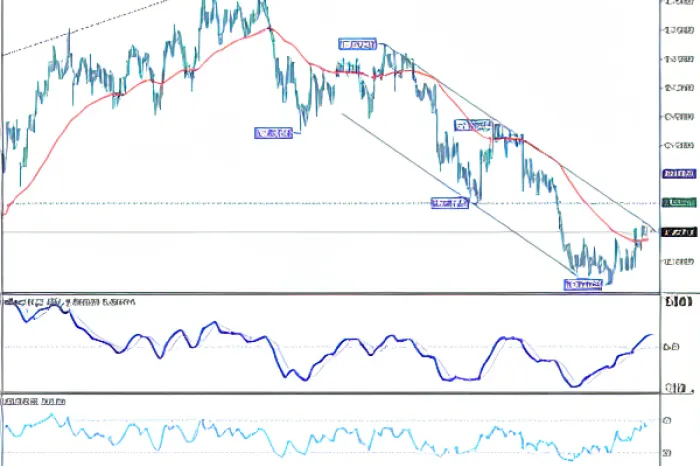
The AUD/USD currency pair is encountering significant resistance around the 0.6955 level, a key Fibonacci retracement point that has stalled its recent upward momentum. After reaching a two-week high, the Australian dollar retreated slightly, reflecting persistent selling pressure as it nears this technical barrier. Market participants are now closely watching the immediate support near the 50-day moving average, which sits just above 0.6900. Should this support fail, downside risks could extend toward the 0.6800 to 0.6850 range.
Economic Factors Impacting AUD/USD
The Reserve Bank of Australia recently opted to keep interest rates steady at 4.10%, signaling caution amid signs of easing inflation and a softening labor market. In contrast, hawkish comments from the U.S. Federal Reserve have bolstered the U.S. dollar, creating headwinds for commodity-linked currencies like the Australian dollar. This divergence in monetary policy stances is contributing to subdued momentum in the AUD/USD pair.
Australia’s heavy reliance on commodity exports and the performance of China’s economy further complicate the outlook. Recent Chinese manufacturing PMI figures fell short of forecasts, while iron ore prices—a critical export for Australia—have declined noticeably. These factors reduce demand for the Australian dollar and add pressure on its ability to break through resistance levels.
Technical Outlook and Market Sentiment
From a technical standpoint, indicators offer mixed signals for AUD/USD. Daily momentum readings show some underlying strength, and weekly stochastics suggest the pair is not overextended, implying room for modest gains. However, longer-term charts highlight bearish trends that temper expectations for a sustained move above the psychologically important 0.7000 mark.
Currently, AUD/USD remains in a consolidation phase just below resistance at 0.6955. A decisive break beneath support near 0.6900 could shift market sentiment toward neutral or bearish territory, potentially pushing prices down to key Fibonacci retracement zones and monthly lows near 0.6750.
Looking Ahead: Key Drivers and Risks
Traders are monitoring upcoming economic data closely for fresh catalysts that might shift this cautious stance. Improved Australian employment numbers or a softer tone from the U.S. Federal Reserve could boost the Australian dollar, possibly driving AUD/USD toward resistance levels near 0.7087 or even higher around 0.7150 over the longer term.
Without such developments, however, the outlook remains cautious as technical challenges combine with fundamental pressures. The interplay of global growth concerns, fluctuating commodity prices, and divergent central bank policies is likely to keep AUD/USD range-bound in the near future.
Overall, AUD/USD stands at a critical juncture where consolidation battles correction amid an uncertain global economic environment. This scenario highlights the importance of disciplined risk management and vigilant attention to forthcoming economic releases that could decisively influence market direction.